Join the archives
Enjoying the journal? Request a catalogue account to explore the concerts, musicians and recordings behind these stories.
Already a member?
Log inYour email must be confirmed and your account approved. Private listening and video require separate permission.
Steve Coleman: In Constant Motion brings together photographs from more than twenty years alongside the saxophonist. The exhibition looks at performance and the life around it, inviting viewers to consider what a photograph can preserve of a musical journey.
By Dimitri Louis
Looking beyond the concert
Since 2003, I have accompanied Steve Coleman as his tour manager, photographer and archivist. The exhibition draws on that proximity: preparation, travel, encounters and performances are all part of its subject.
Concert photography often centres on a musician playing. That is a powerful image, but it leaves questions outside the frame. What surrounds the performance? What kinds of attention lead into it? What remains when the audience has left?
For this exhibition, the photographs offer a way to move between those questions. The viewer is invited to spend time with moments that have different scales and different kinds of intensity.
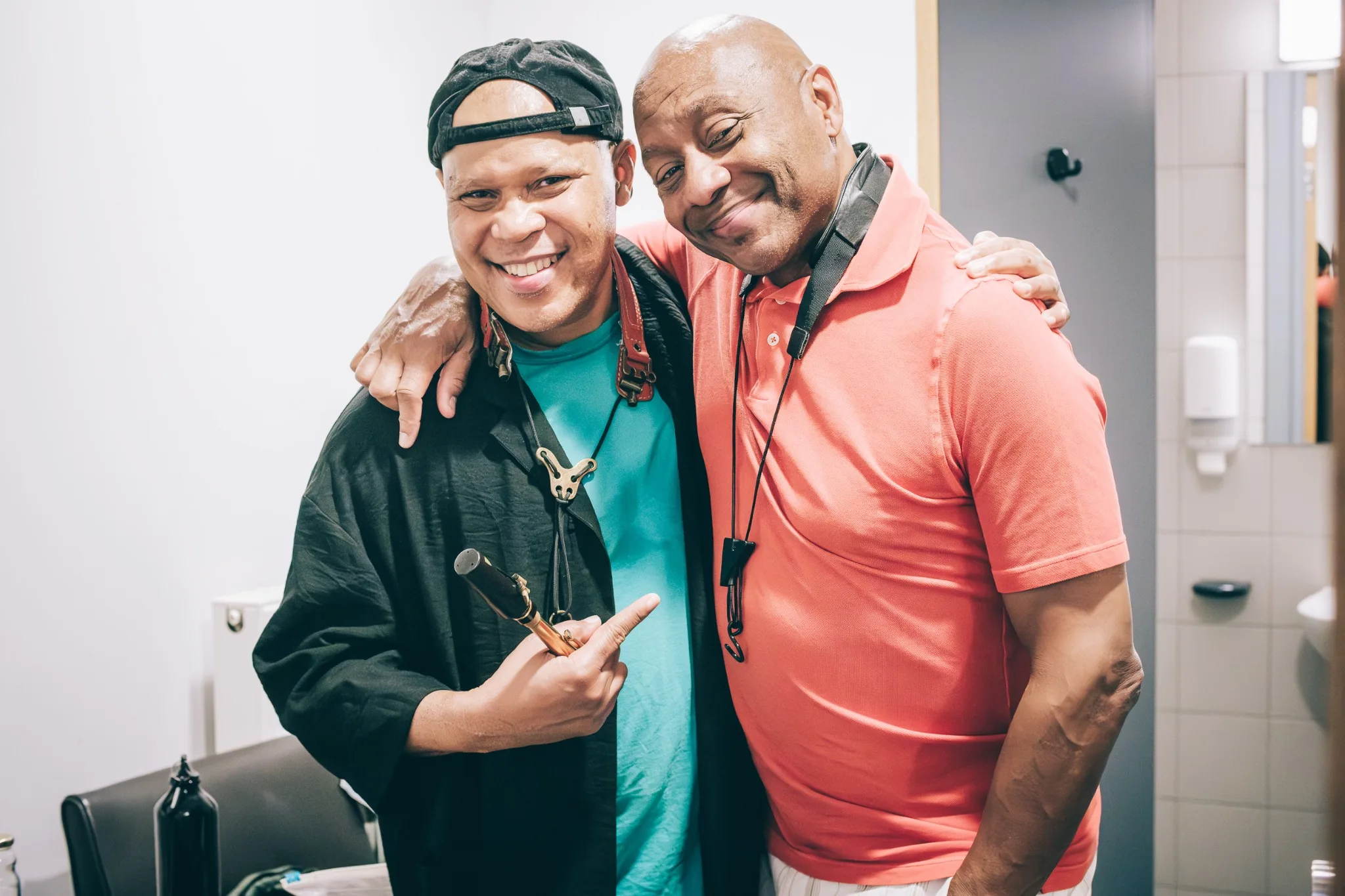
Steve Coleman and Branford Marsalis, Ghent, 2025
Photograph © Dimitri Louis
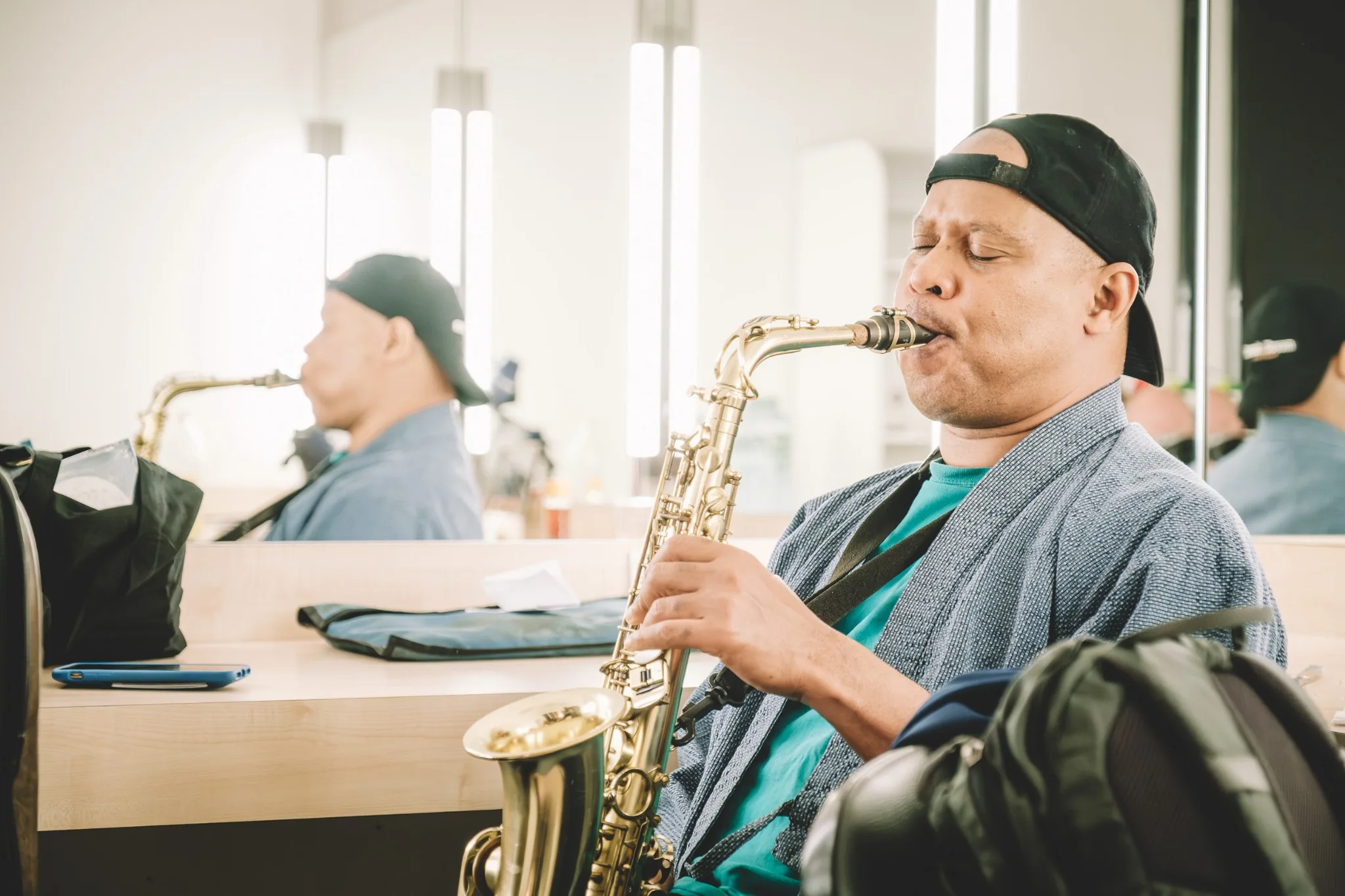
Toulouse, 2019
Photograph © Dimitri Louis
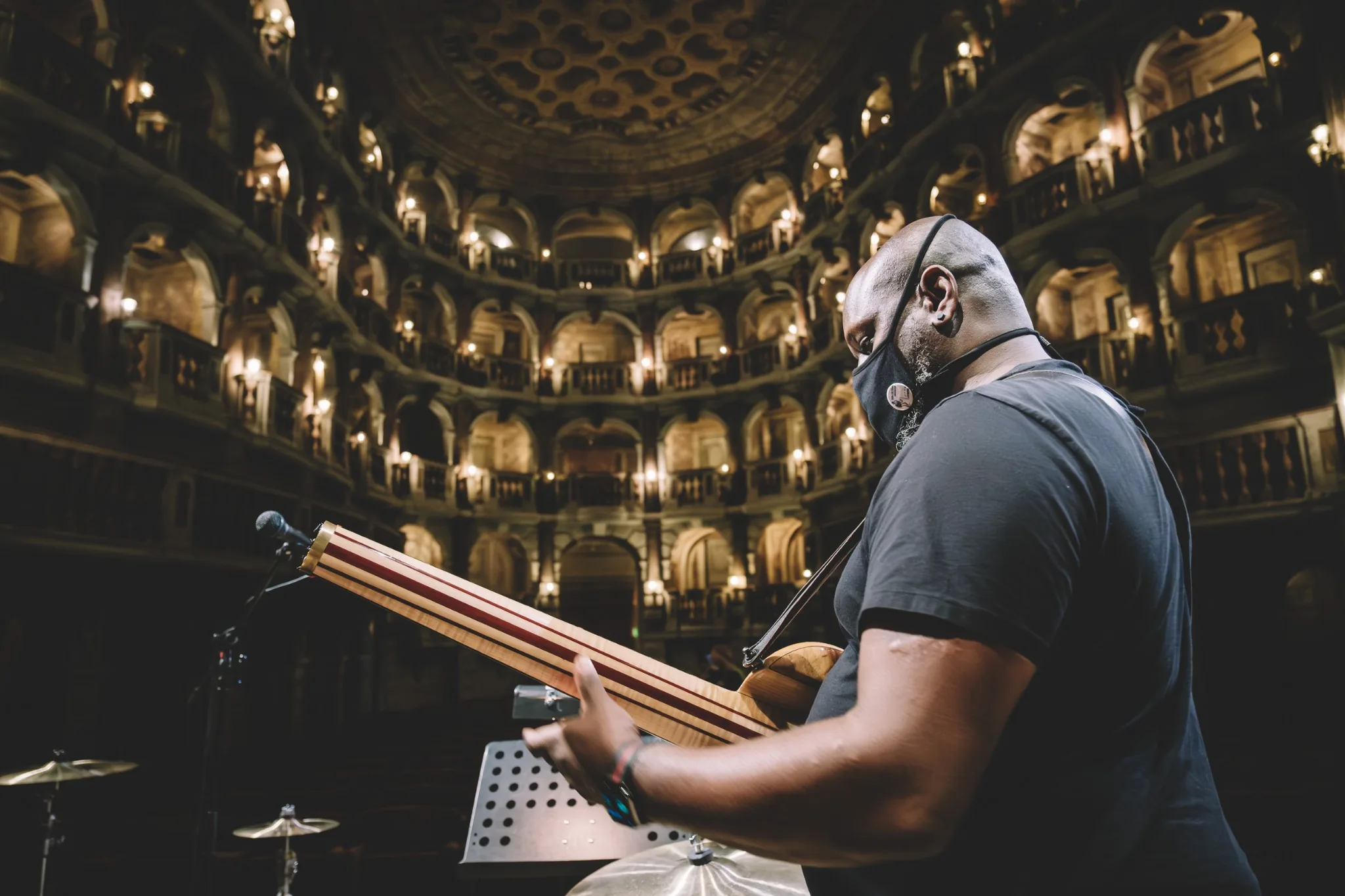
Mantova
Photograph © Dimitri Louis
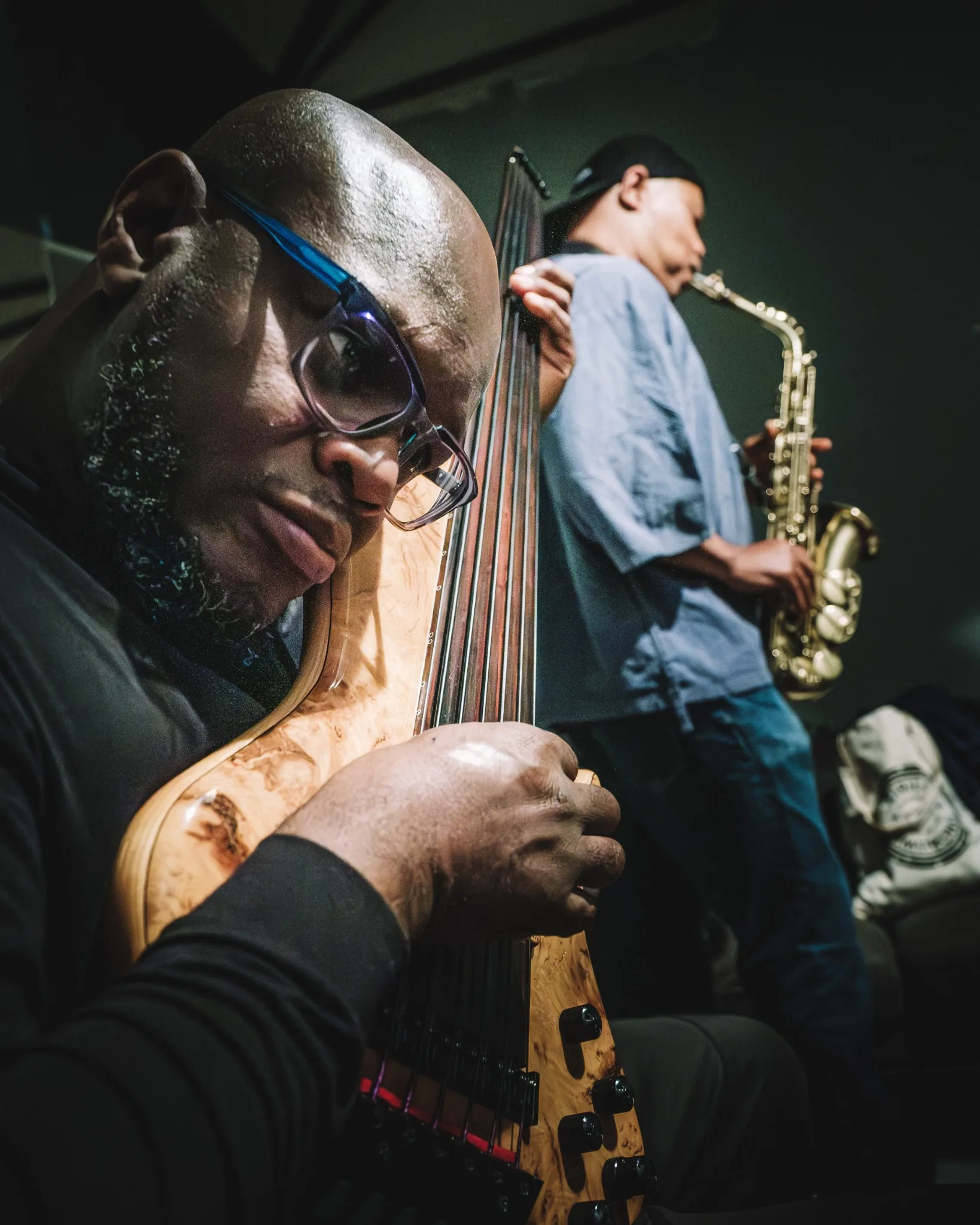
New Morning, Paris
Photograph © Dimitri Louis
What “constant motion” means
The title gives the photographs a connecting idea. Motion can be a journey between places, a gesture during performance, or a change in how someone attends to another person.
A photograph interrupts that movement. It gives us time to look at something that, in life, did not wait for us. Yet the image also suggests a before and an after: a conversation continuing beyond the frame, a performance carrying on after the shutter closes.
That tension is part of the exhibition’s appeal. Each image is a fixed moment within a continuing story. Seen together, the photographs invite connections without requiring every moment to tell the same story.
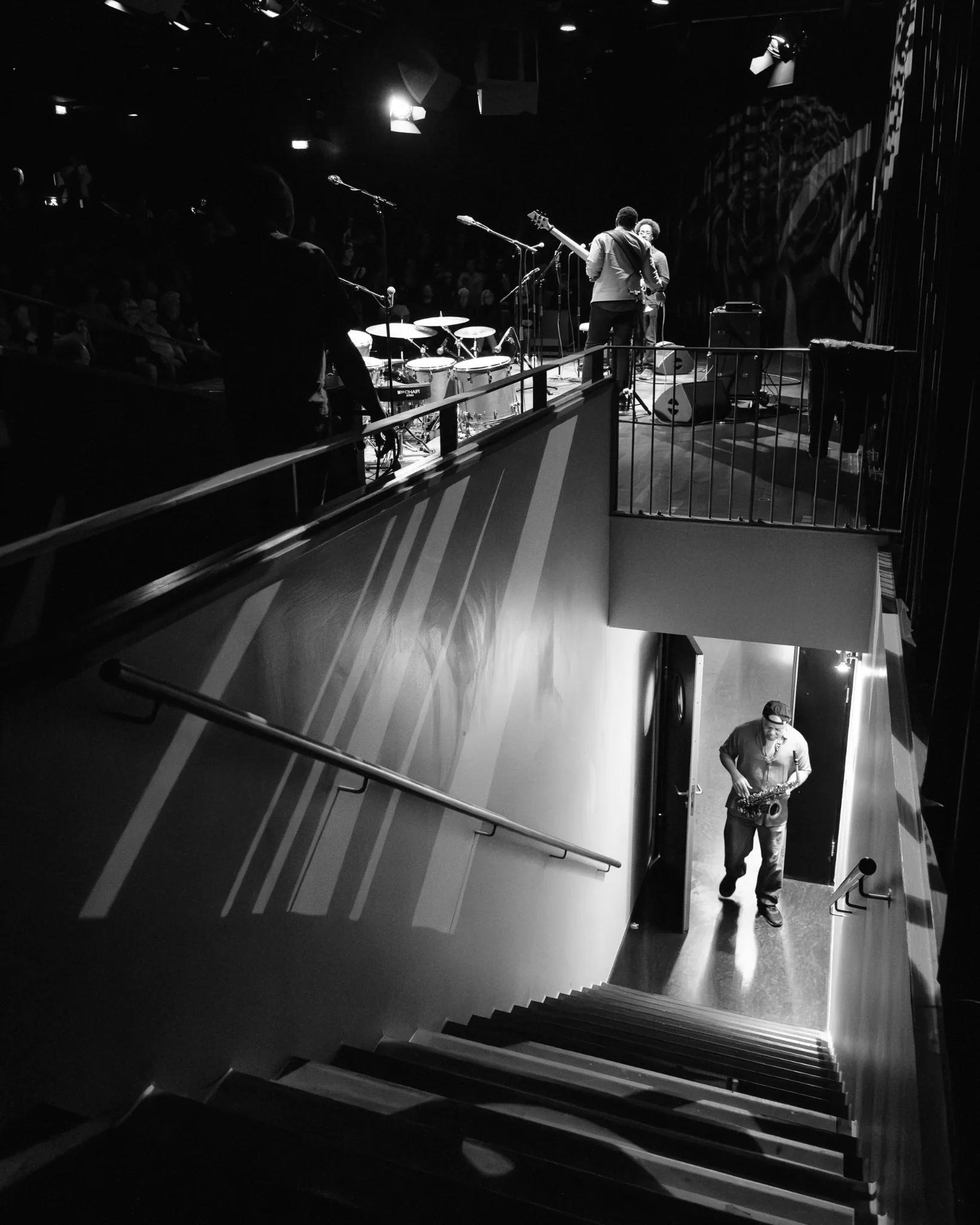
Photograph © Dimitri Louis
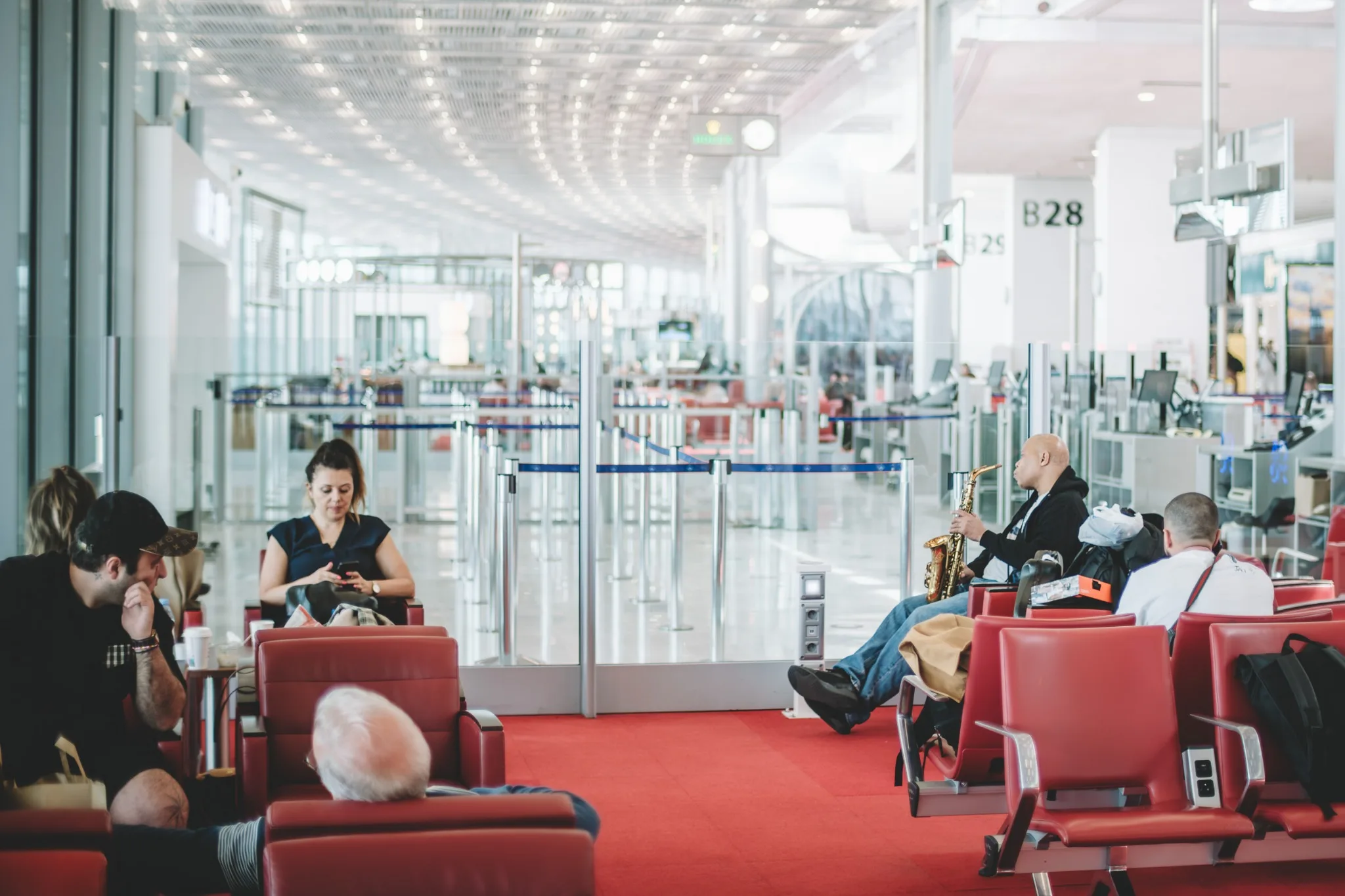
Photograph © Dimitri Louis
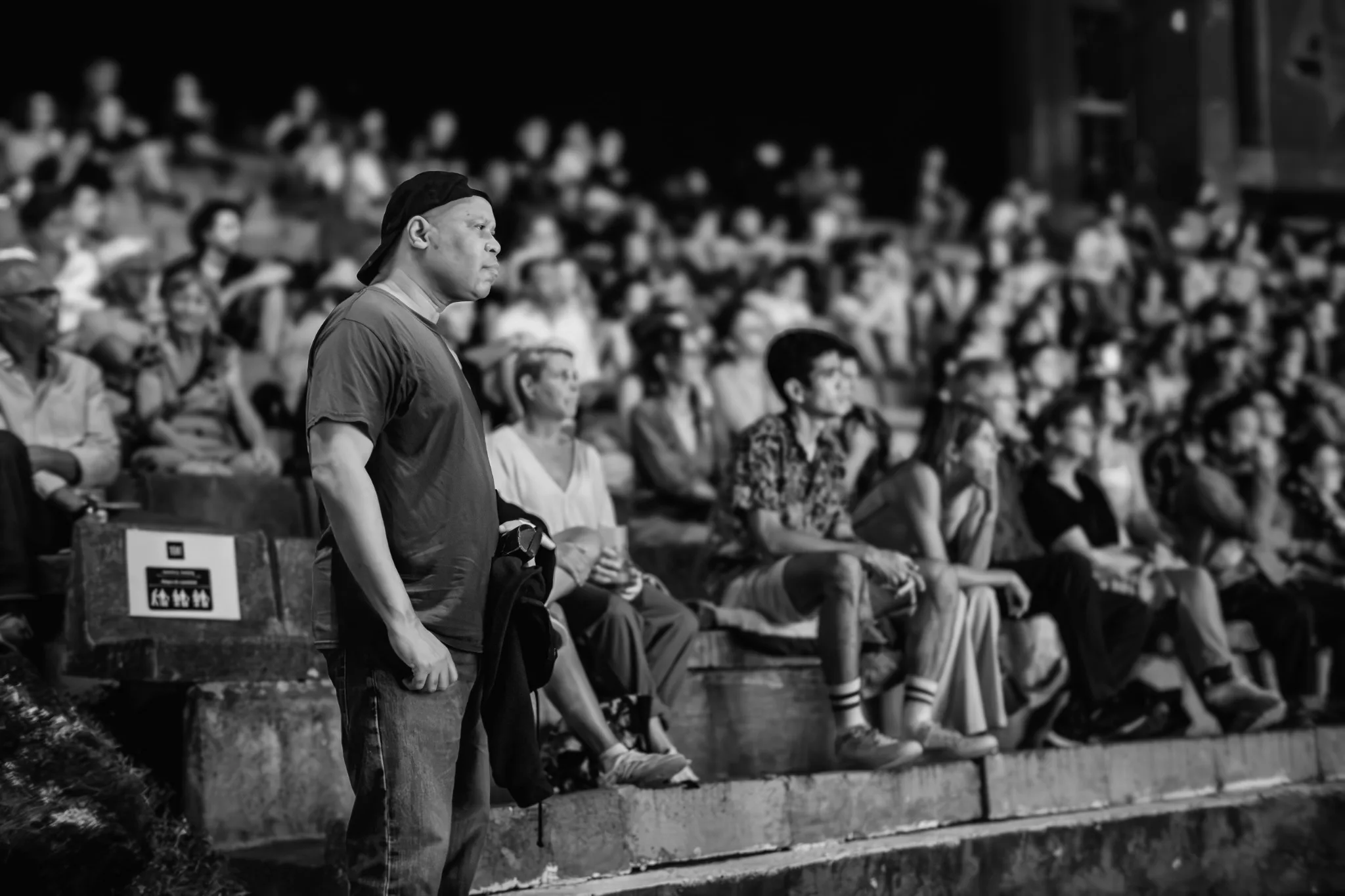
Réunion Island, 2025
Photograph © Dimitri Louis
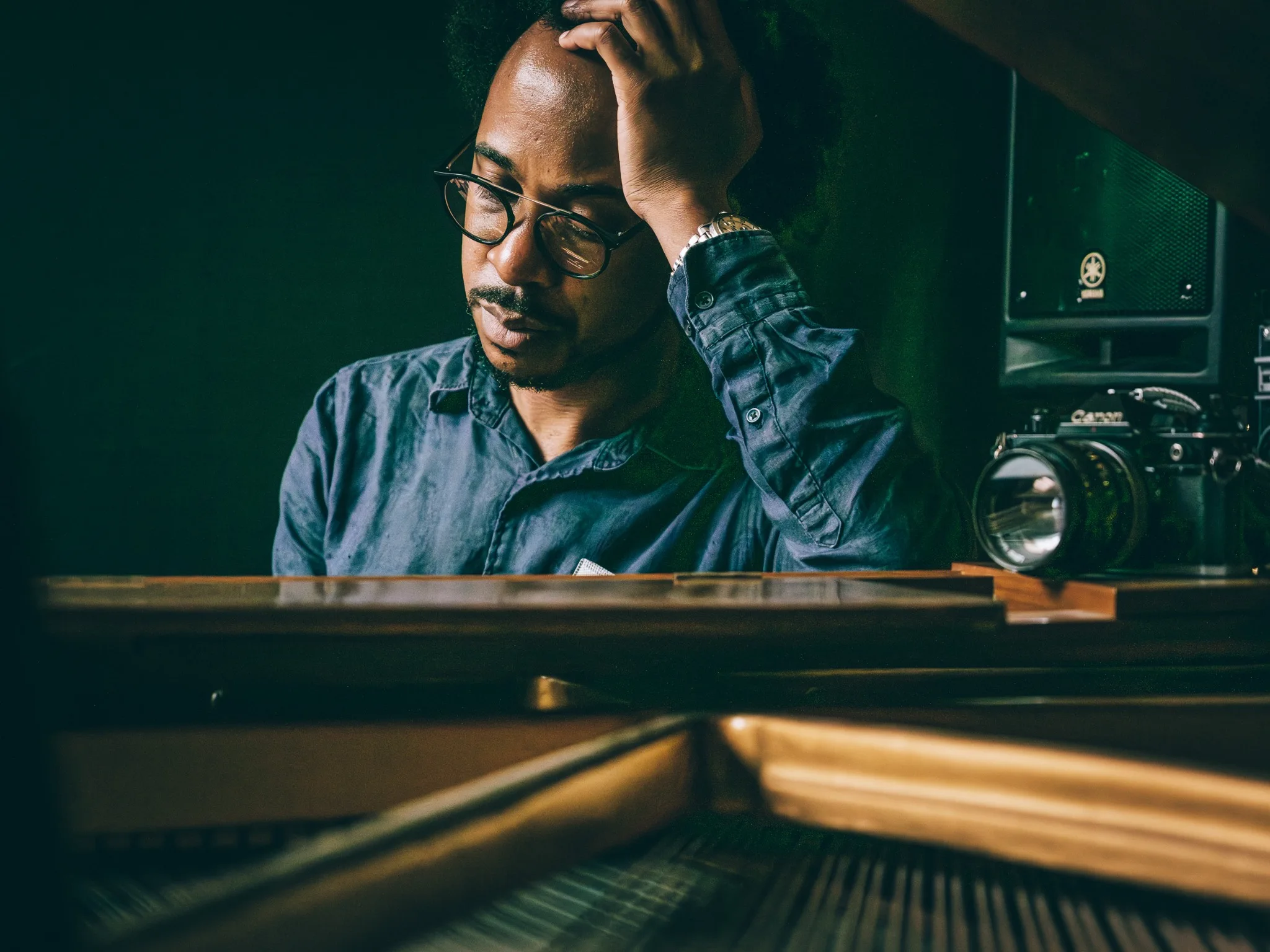
masterclass, Madrid
Photograph © Dimitri Louis
The people around the music
The exhibition includes backstage life, exchanges with musicians, moments of laughter and encounters with children during residencies. These subjects widen the view beyond the central figure on stage.
An ensemble photograph can be read through the relationships it holds. Where is attention directed? Who is listening? How does the space bring people together or keep them apart?
The same questions can follow us into a backstage image. The setting changes, but the human relationships remain part of what we are looking at. For a viewer discovering Steve Coleman’s music, those photographs provide an approachable point of entry. For someone who knows it well, they offer another way to return to familiar names and faces.
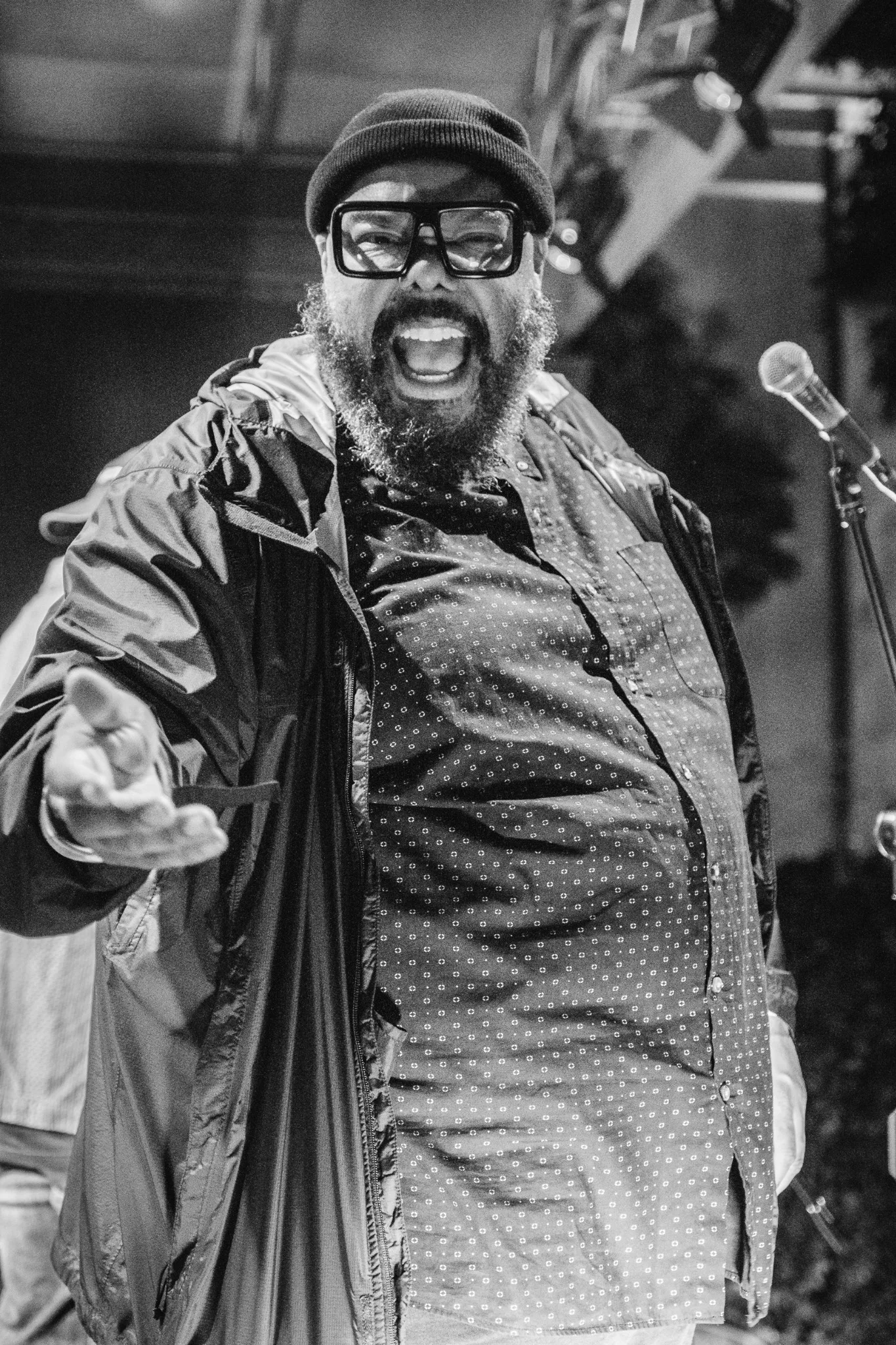
Metrics, Lublin
Photograph © Dimitri Louis
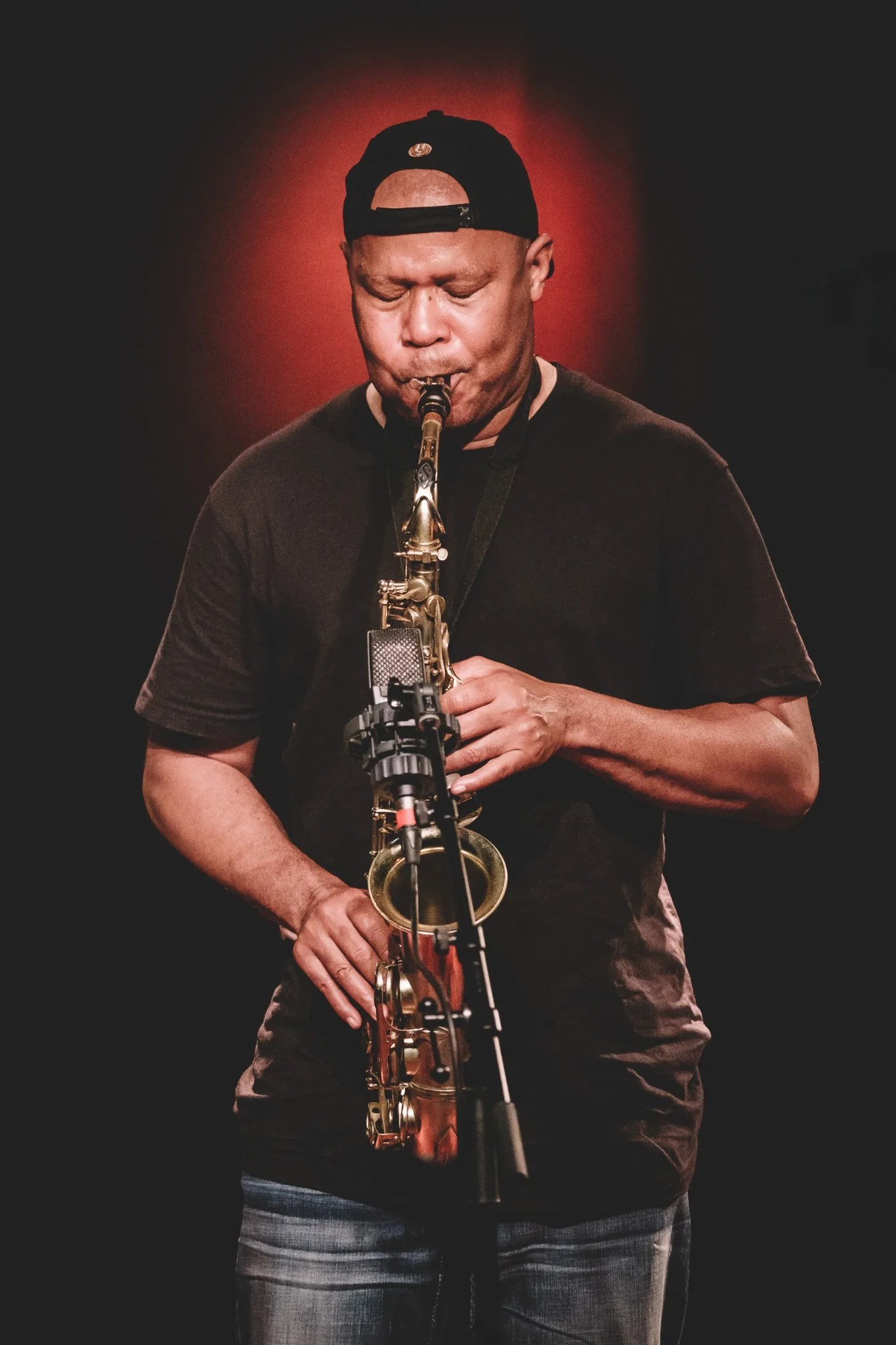
New Morning, Paris
Photograph © Dimitri Louis
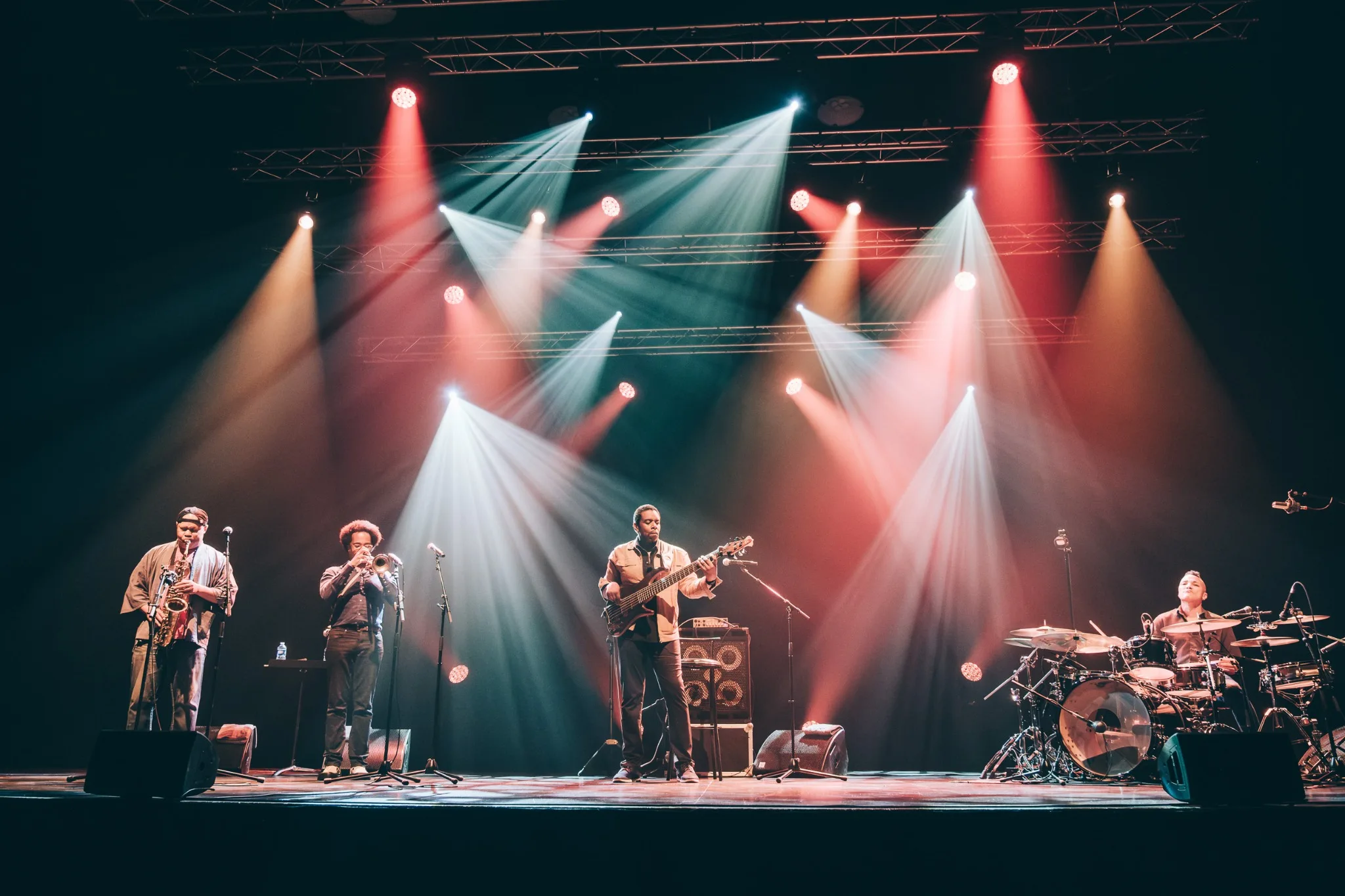
Rennes, 2024
Photograph © Dimitri Louis
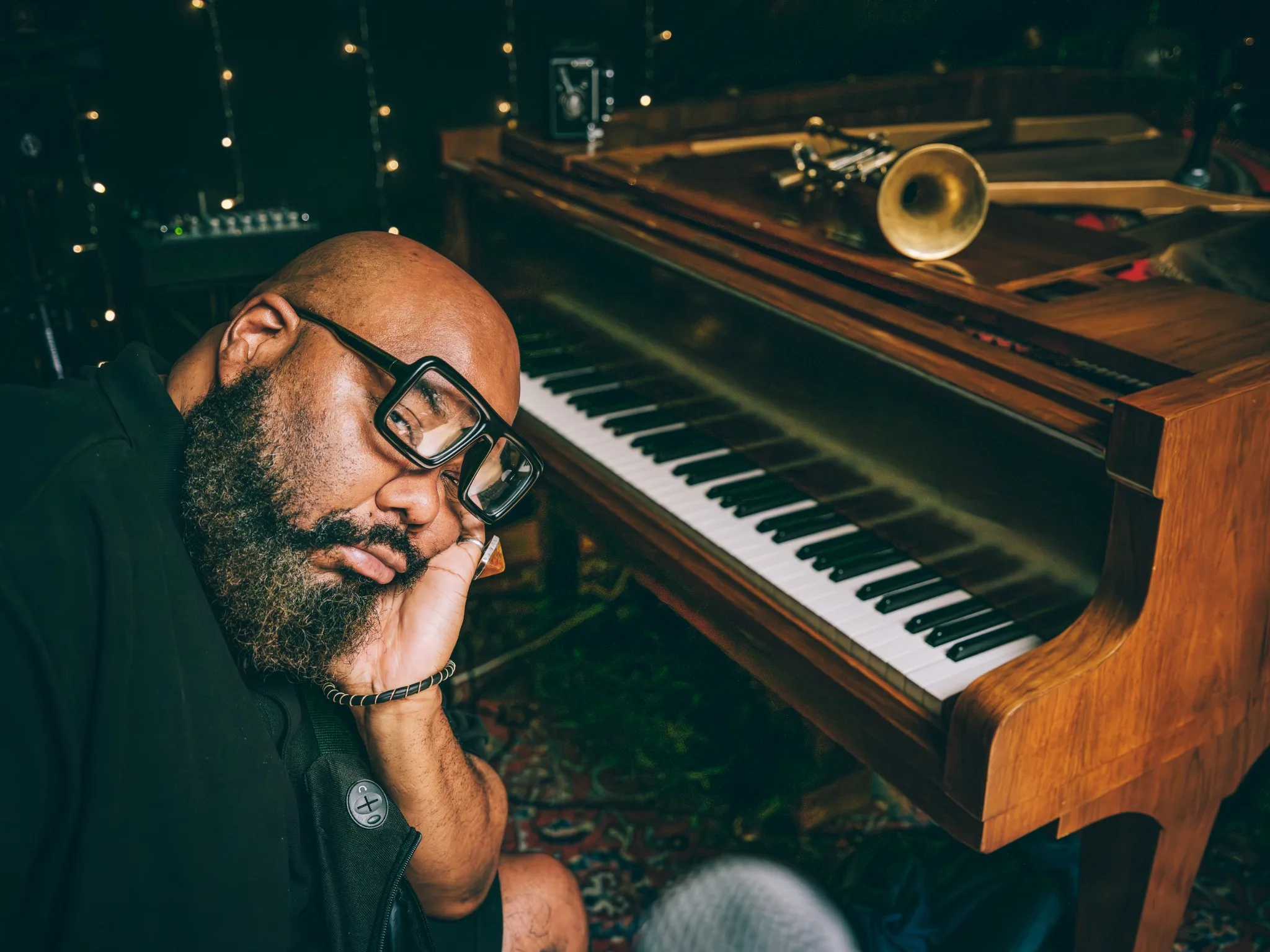
Marathon, Madrid
Photograph © Dimitri Louis
Twenty photographs, a different kind of sequence
The project page presents a selection of twenty photographs for the exhibition, commissioned by Annonay Rhône Agglo, France, with support from Maison de la musique, En Scènes, SMAC07 and Bibliothèque Saint-Exupéry.
Moving from an archive to an exhibition changes the experience of the images. In a catalogue, we might search for a date or a person. In an exhibition, we encounter a selection and consider the relationships within it.
The photograph beside another photograph can suggest a connection we did not come looking for. A quiet image can change the pace of our viewing. We can revisit an earlier picture with a different sense of what it contains.
The selection therefore offers a route through the larger body of work. It leaves room for viewers to make their own associations and to carry questions back to the music.
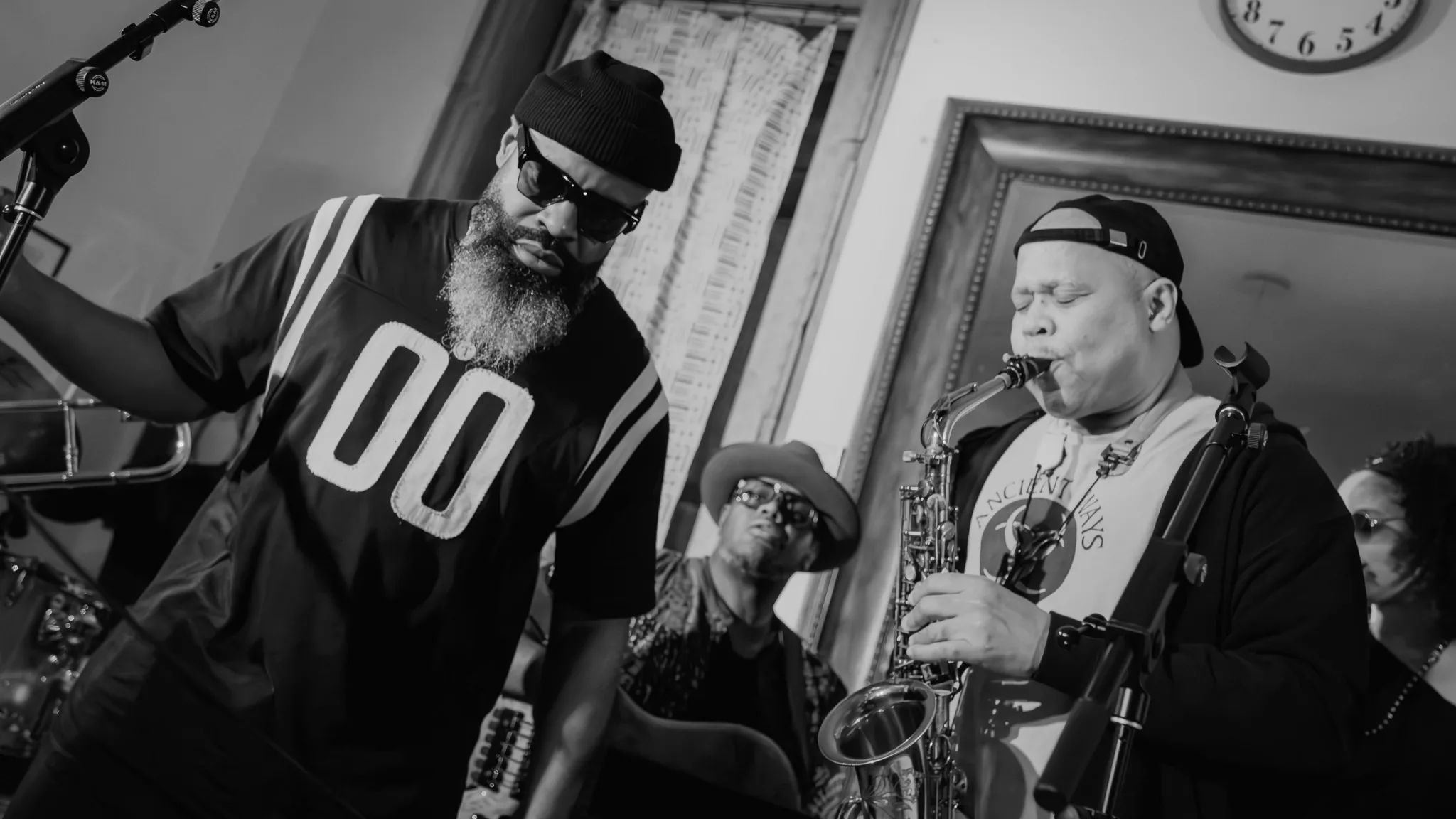
Black Thought at Atelier Harlem
Photograph © Dimitri Louis
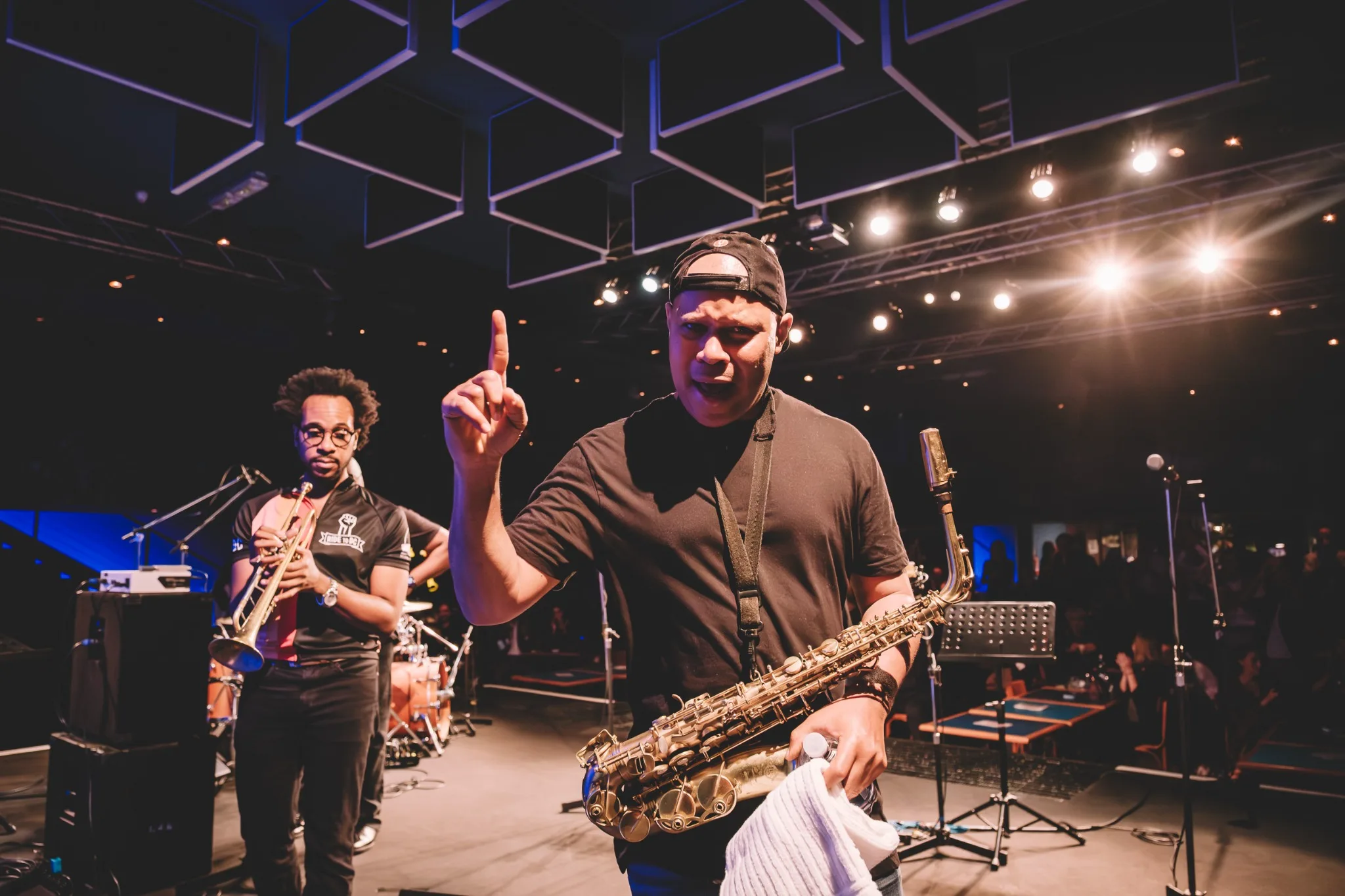
Blue Note Milano
Photograph © Dimitri Louis
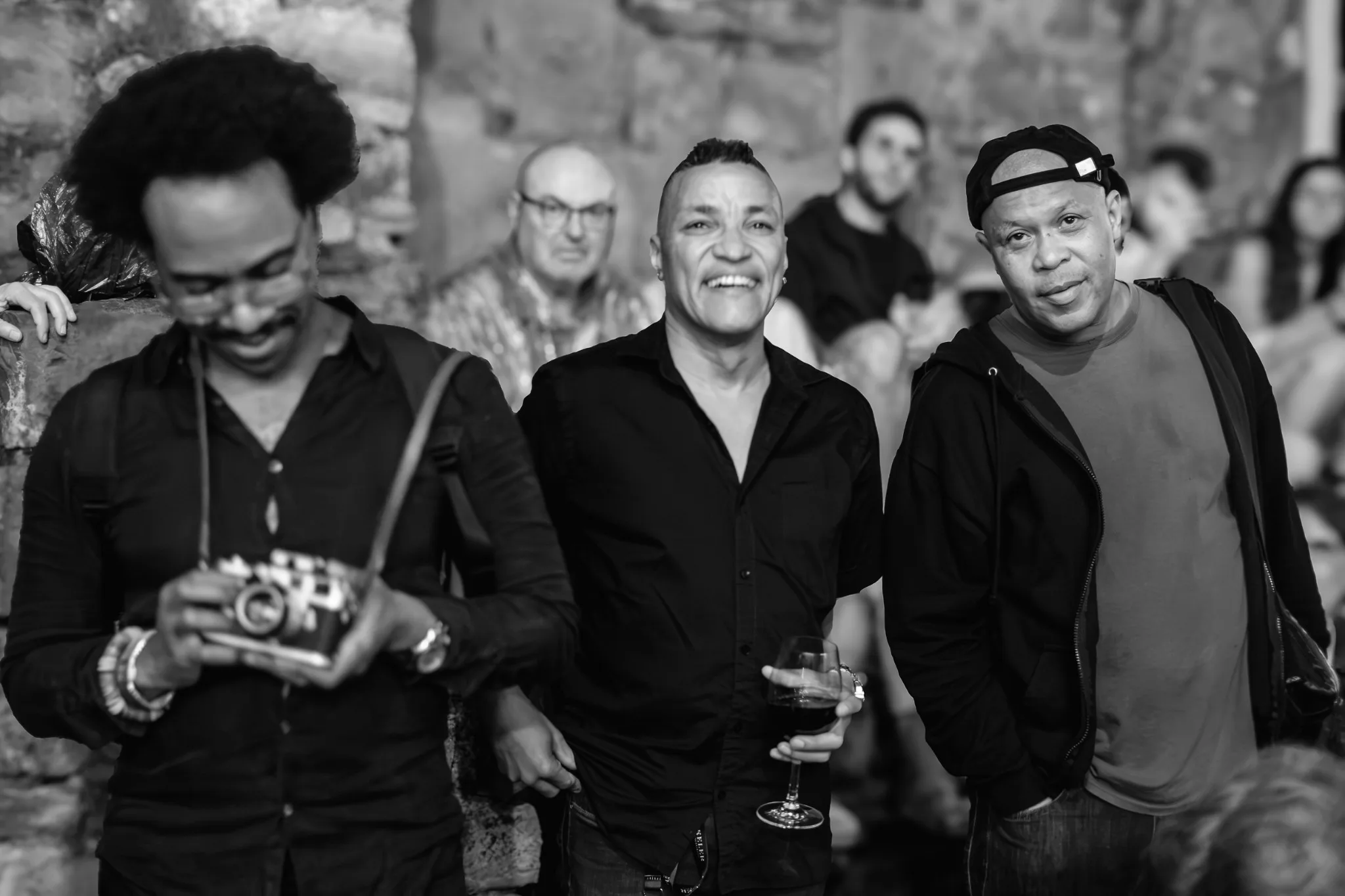
Photograph © Dimitri Louis
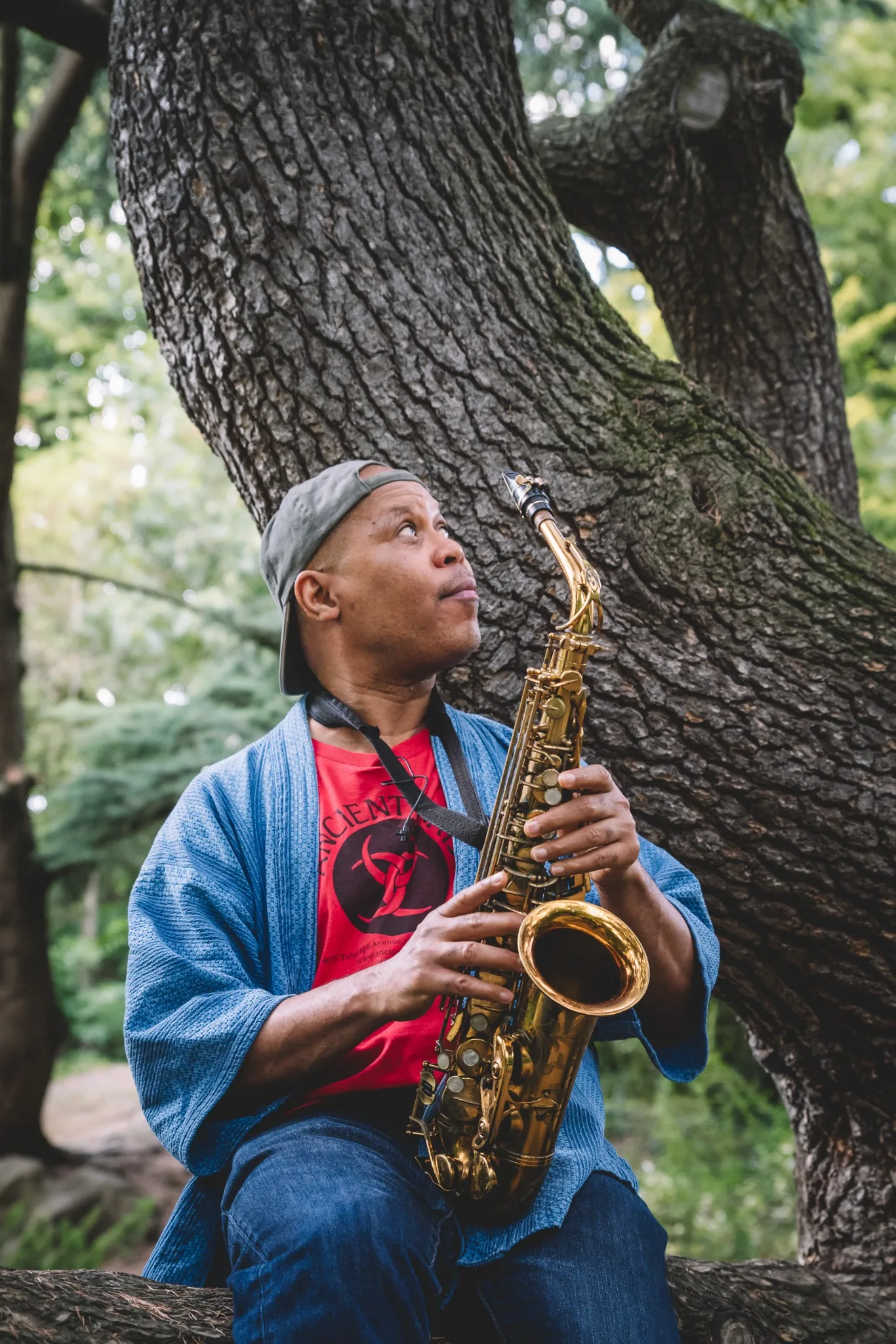
Photograph © Dimitri Louis
Another way into the archives
Steve Coleman Archives and In Constant Motion offer complementary experiences. The catalogue connects material to documented events; the exhibition asks us to spend time looking.
Both make it possible to return to something that passed quickly. Together, they help keep the visual record in conversation with the music it accompanies.
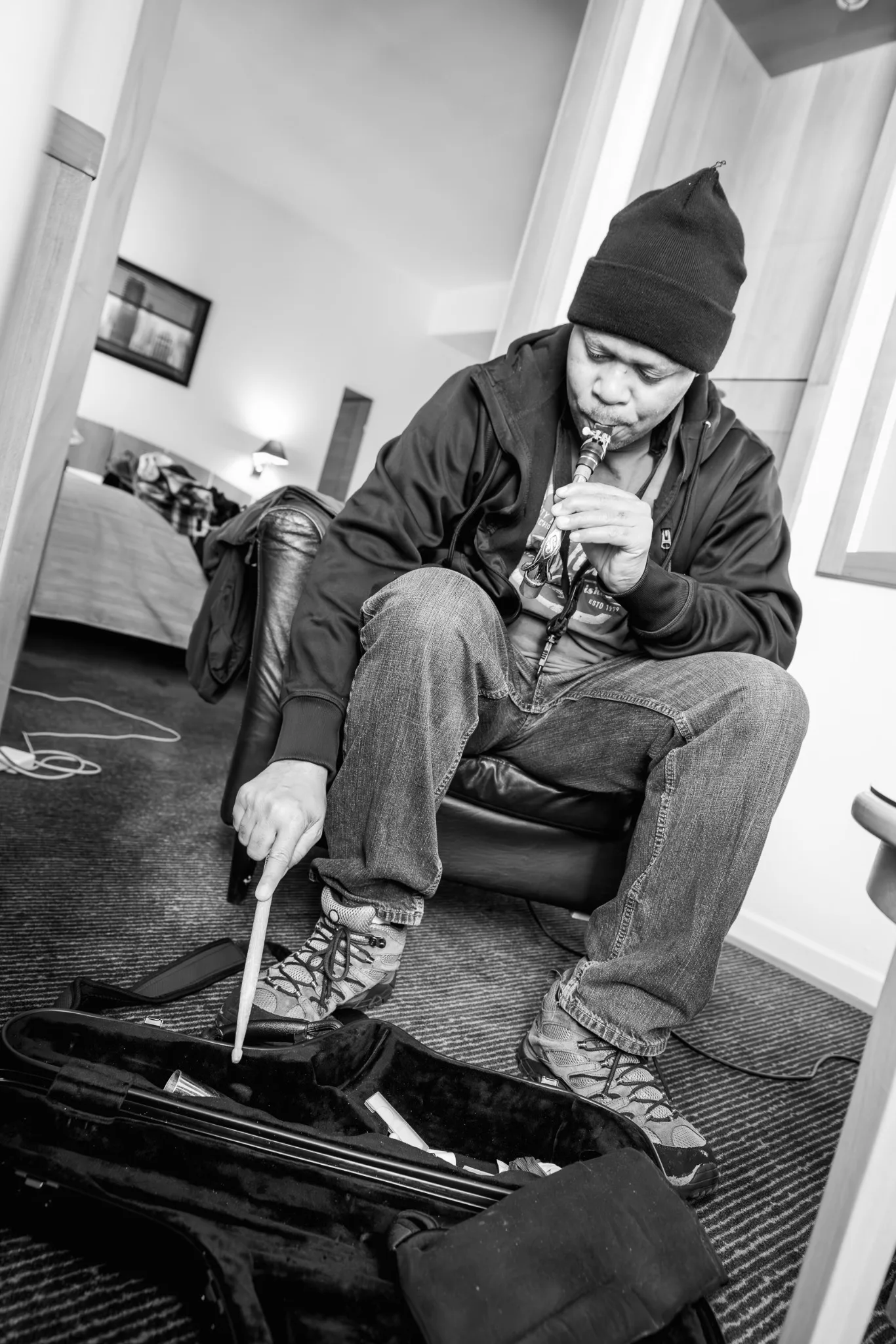
autumn 2017
Photograph © Dimitri Louis
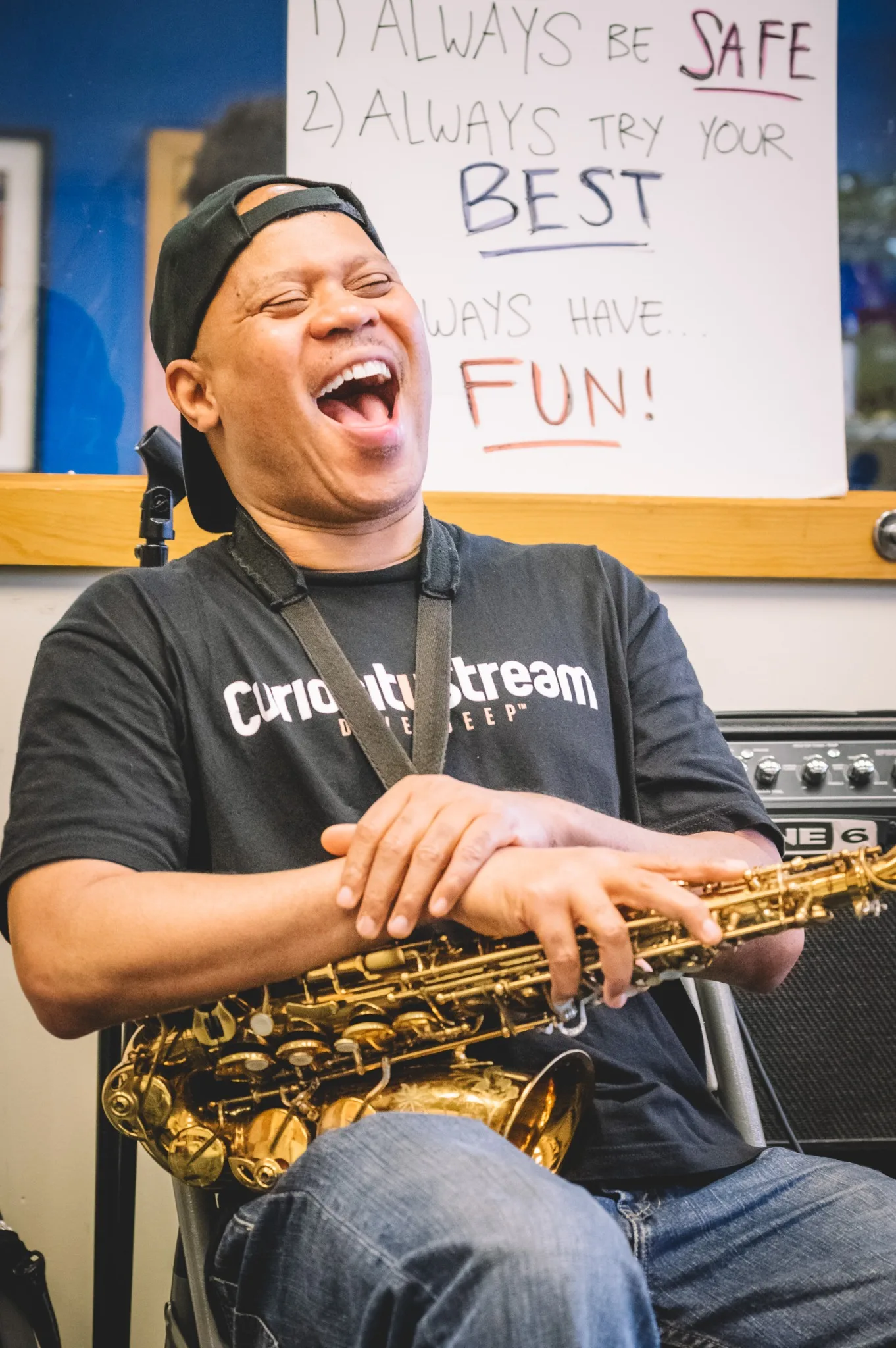
Photograph © Dimitri Louis
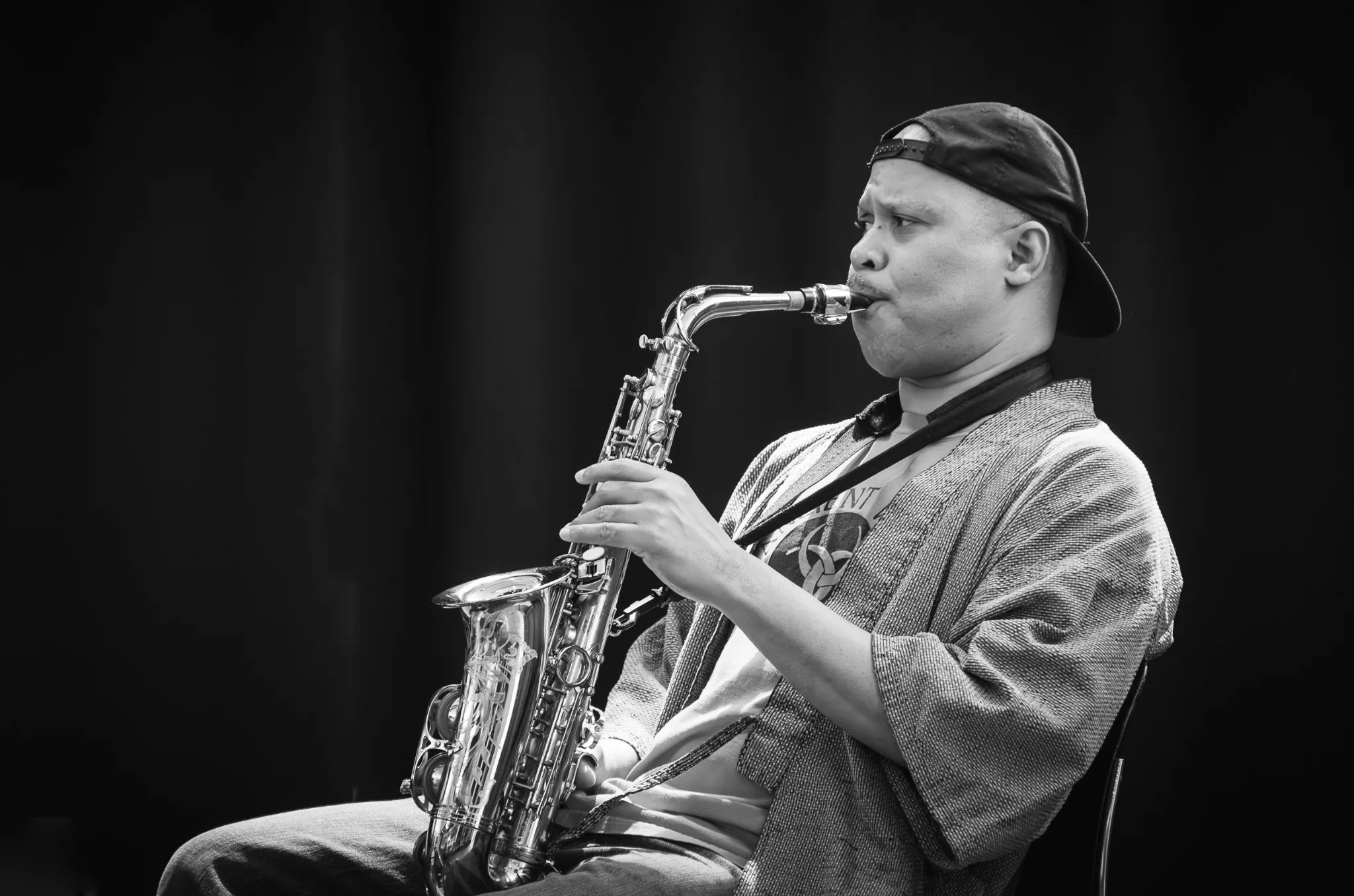
Photograph © Dimitri Louis
Explore Steve Coleman: In Constant Motion on Dimicology
Photography © Dimitri Louis. All rights reserved.
Prepared with AI assistance from the photographer’s exhibition statement and archival context.
Leave a Reply
You must be logged in to post a comment.