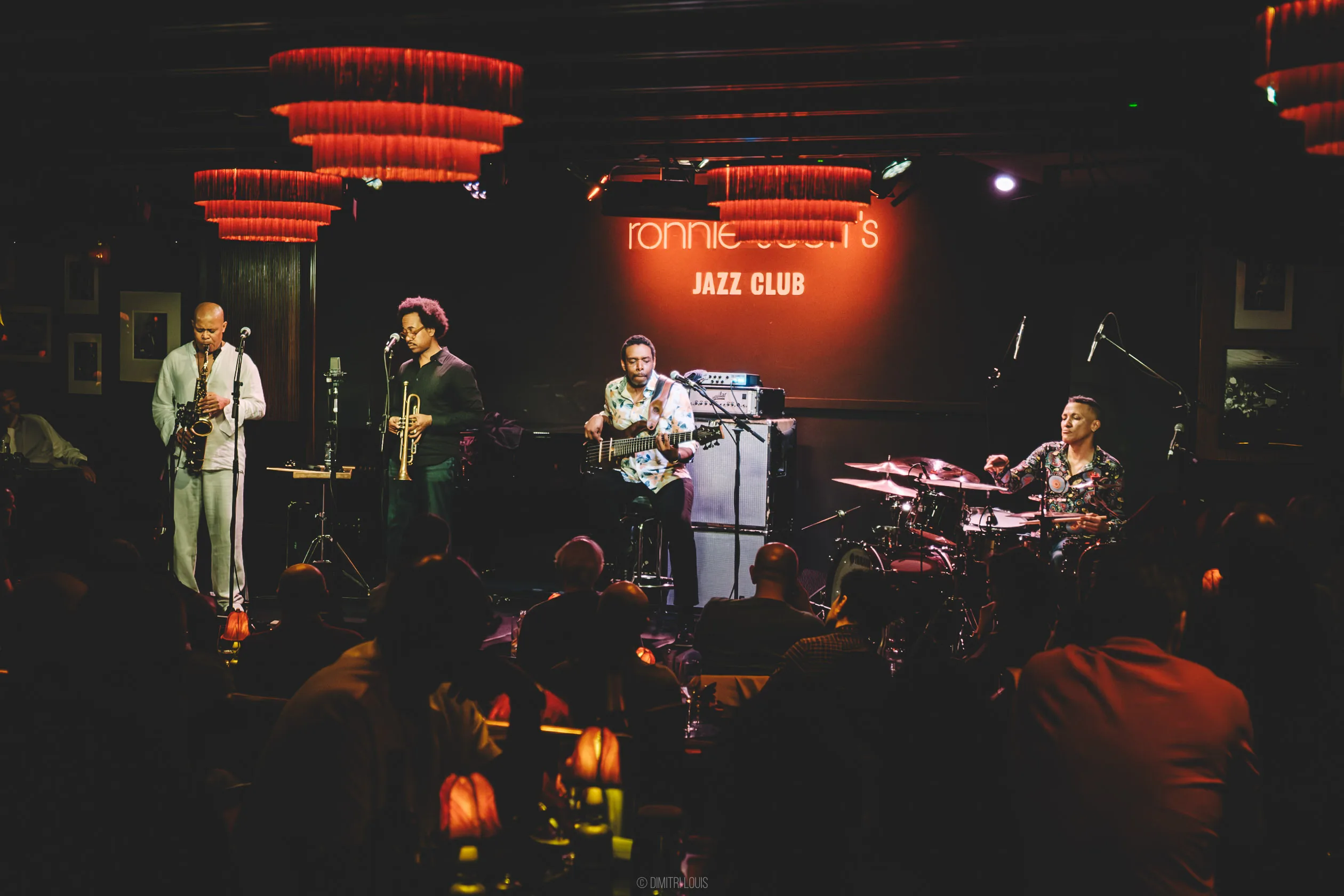
On March 18, 2026, Steve Coleman and Five Elements performed two sold-out shows at Ronnie Scott’s Jazz Club in London. Joining Coleman were Jonathan Finlayson on trumpet, Rich Brown on electric bass and Sean Rickman on drums: a quartet whose music places collective invention at the heart of the performance.
Concert details — London, March 18, 2026
Photography © Dimitri Louis
Concert Report · London
Ronnie Scott’s · 18 March 2026
Venue: Ronnie Scott’s Jazz Club, London, United Kingdom
Steve Coleman — alto saxophone
Jonathan Finlayson — trumpet
Rich Brown — electric bass
Sean Rickman — drums
Back at Ronnie Scott’s
There are venues where the history of the music seems almost physically present. Ronnie Scott’s is one of them.
For Steve Coleman and Five Elements, the London engagement offered another setting for a musical approach that continues to evolve more than four decades into the group’s history.
Longevity, in this context, is not simply a matter of preserving a sound. Five Elements invites us to hear continuity through change: individual voices working within a shared language, with each performance opening that language to new possibilities.
Music Built Through Interaction
Describing Five Elements solely in terms of compositions and solos leaves out an essential part of its musical identity: interaction.
The useful question is not simply who is soloing, but how each contribution changes the possibilities available to everyone else. A phrase can carry a melody, suggest a rhythmic direction or invite a response. Its meaning emerges through the ensemble.
In his review of the second show, AJ Dehany describes an approach to spontaneous composition in which rhythmic, harmonic and melodic ideas contribute to structures formed during performance.
That account provides a concrete starting point for listening to Five Elements: the music’s precision and openness belong to the same process.
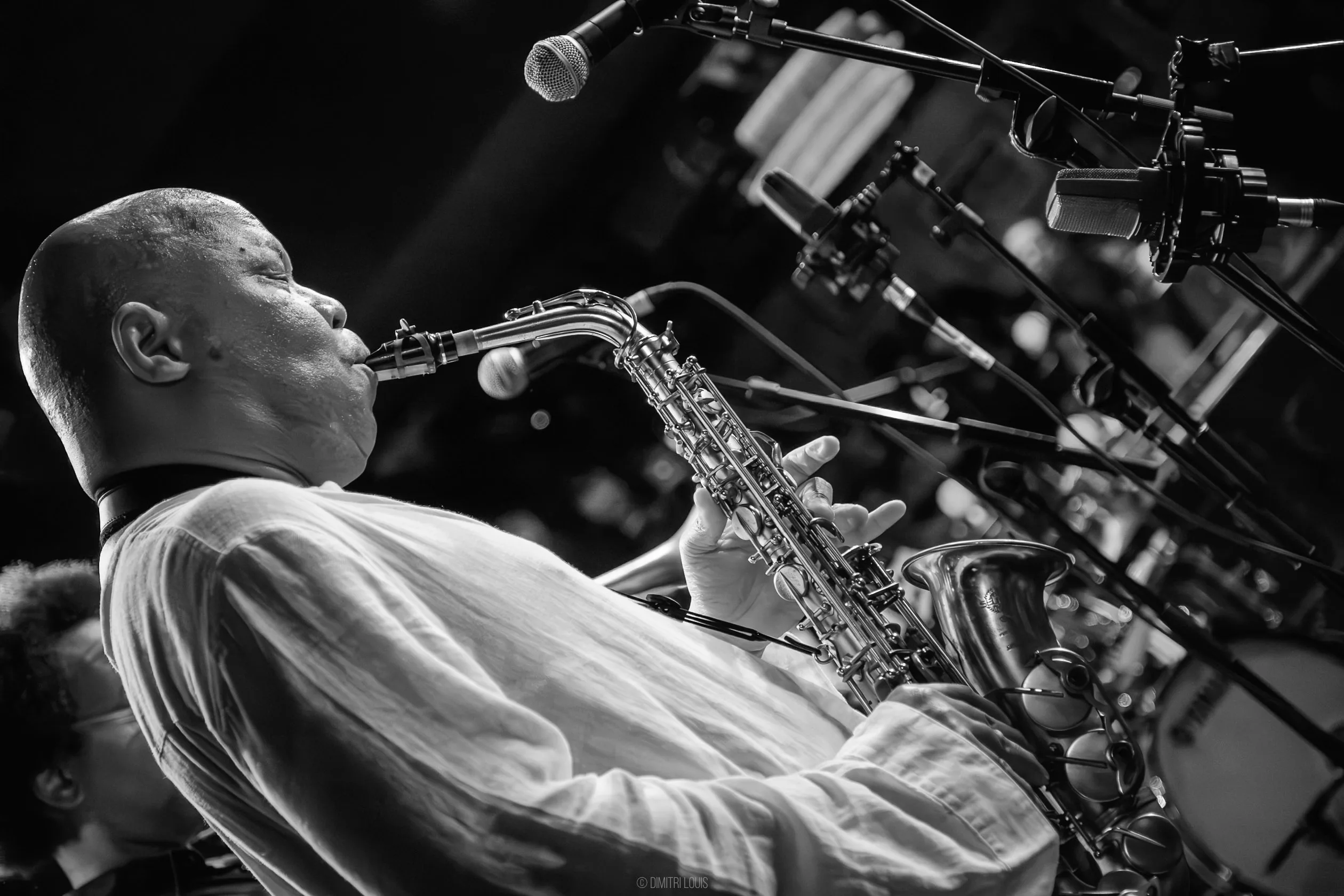
Coleman’s alto is central to that process, but listening only for the lead voice risks missing the exchanges that give a phrase its force: a response, an interruption, a shift in emphasis. The musical idea extends beyond the instrument that first introduces it.
Four Musicians, One Moving Structure
The London quartet brings four distinct voices into that shared space.
In the dialogue between Coleman’s alto and Jonathan Finlayson’s trumpet, the two horn parts can be understood as intersecting perspectives rather than a melody and its accompaniment. Their relationship invites attention to phrasing, spacing and the way one line changes our hearing of another.
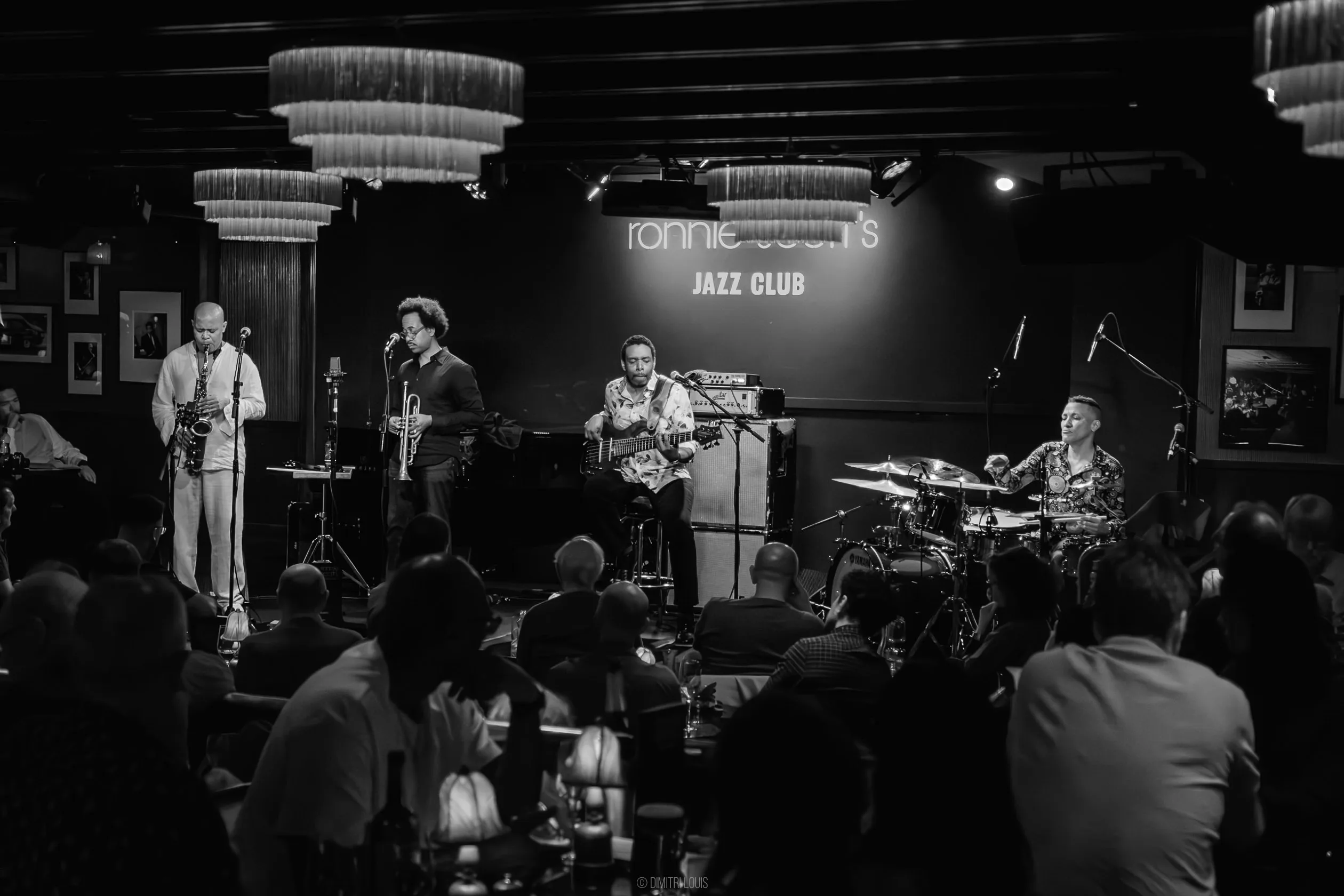
The same perspective applies to Rich Brown and Sean Rickman. Calling bass and drums the rhythm section is useful shorthand, but it can suggest a division between support and invention.
Brown’s electric bass and Rickman’s drums are part of the musical argument itself. Pulse, articulation and rhythmic response deserve the same attention as the horn lines.
Complexity Without Losing the Pulse
Complexity is not the destination.
Rhythmic detail can invite close analysis, but analysis is only one way into the music. Another is to follow its movement: the recurrence of a figure, the tension between patterns, the moment an accent changes what we thought we were hearing.
The value of returning to a performance lies partly in that freedom. A first encounter may be physical and immediate; a later listening may reveal connections within the ensemble that were less apparent before.
The Intimacy of Ronnie Scott’s
The photographs preserve the setting of the London engagement: the red pendant lamps, the audience tables close to the stage and the four musicians beneath the club’s familiar sign.
A written account can identify a date, venue and line-up. Photographs preserve other dimensions of an evening: distances, sightlines, light and the relationship between a stage and the room around it.
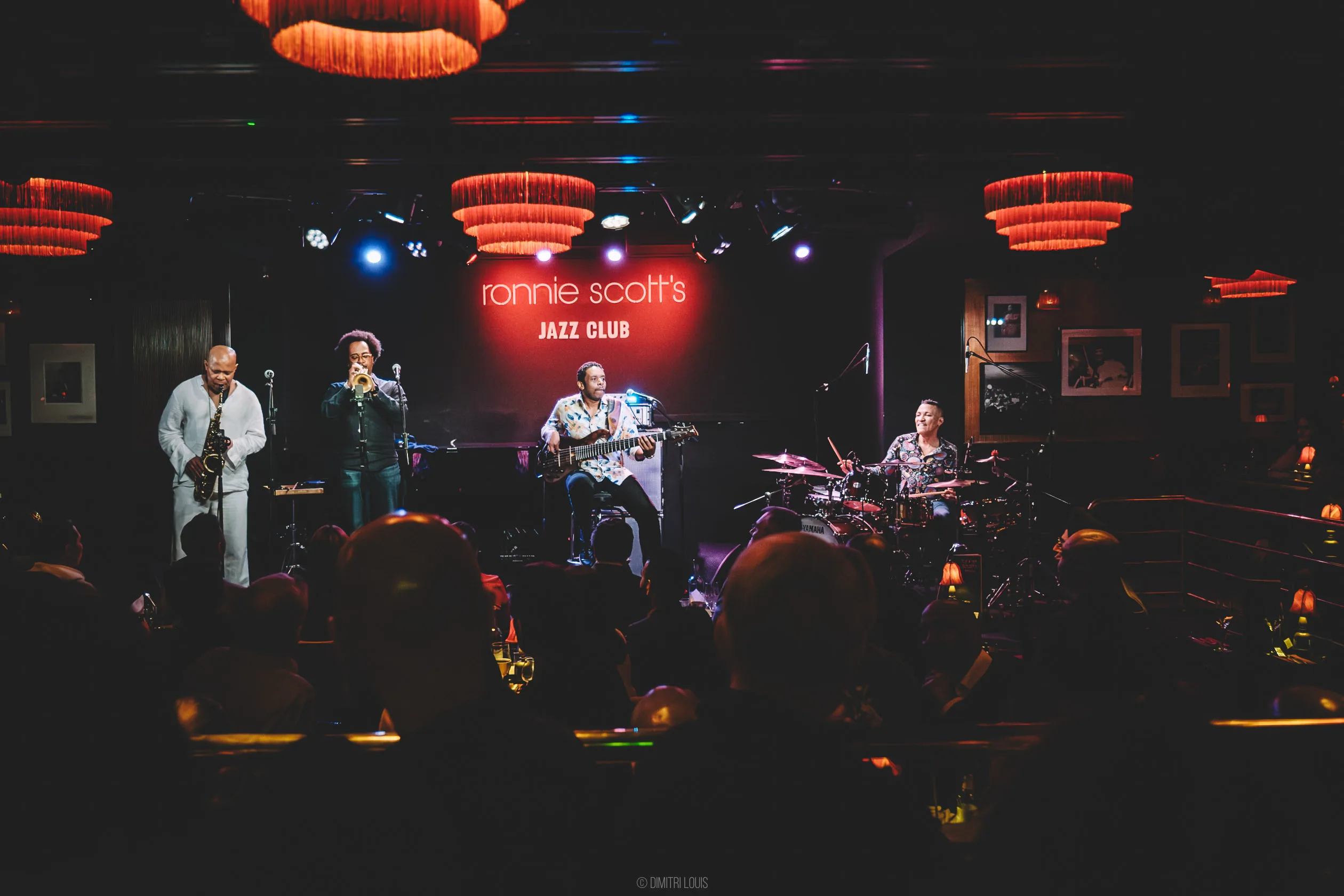
For Steve Coleman Archives, those details belong alongside the musical record. They locate a performance in a physical place and preserve the photographer’s perspective within it.
Still Searching
“Still moving forward” is the thread connecting this view of Five Elements: a group whose history provides a language for further exploration.
An archive preserves dates, names, photographs and recordings. It also makes it possible to return to the music and hear relationships that may have escaped us the first time.
The Ronnie Scott’s engagement becomes part of that continuing record. Its significance lies both in the history surrounding Five Elements and in the invitation to listen again.
Explore the concert entry in Steve Coleman Archives
Follow the musicians
Discover more music and updates from the quartet.
- Steve Coleman — Instagram · Official website
- Jonathan Finlayson — Instagram
- Rich Brown — Instagram · Official website
- Sean Rickman — Instagram · Artist links
Sources & Credits
Concert details were checked against AJ Dehany’s review in UK Jazz News, published on March 23, 2026. The review covers the second show.
Further reading: Jazzwise — “Steve Coleman & Five Elements: still an otherworldly force after four decades”.
All photographs © Dimitri Louis. All rights reserved.
This article was prepared with AI assistance from material supplied to Steve Coleman Archives and the credited concert review.